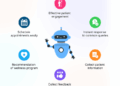
Exploring the realm of Healthcare Conversational AI and its functioning, this introduction invites readers to delve into a world shaped by advanced technology, promising an enlightening experience filled with valuable insights.
Delve into the intricate workings of Healthcare Conversational AI and uncover its impact on modern healthcare practices.
What is Healthcare Conversational AI?
Healthcare Conversational AI refers to the use of artificial intelligence technology in healthcare settings to facilitate natural and seamless communication between patients, healthcare providers, and other stakeholders. This technology enables interactive and personalized conversations through chatbots, virtual assistants, and other AI-powered systems.
Role of AI in Healthcare Conversations
Artificial intelligence plays a crucial role in healthcare conversations by providing timely and accurate information to patients, assisting in appointment scheduling, answering frequently asked questions, and even monitoring patient symptoms remotely. AI algorithms are designed to understand natural language, recognize patterns, and continuously learn from interactions to improve the quality of communication.
Examples of AI in Healthcare Communication
- Chatbots integrated into hospital websites to provide instant support and information to visitors.
- Virtual assistants helping patients schedule appointments, refill prescriptions, and access medical records.
- Remote monitoring systems using AI to track patient data and alert healthcare providers of any concerning changes.
Benefits of Using AI in Healthcare Conversations
- 24/7 availability for patients to seek information and support.
- Reduction in administrative tasks for healthcare staff, allowing them to focus more on patient care.
- Improved accuracy and consistency in information provided to patients.
- Enhanced patient engagement and satisfaction through personalized interactions.
How does Healthcare Conversational AI Work?
Conversational AI in healthcare involves the use of artificial intelligence to facilitate communication between patients, healthcare providers, and other stakeholders in the healthcare industry. This technology leverages natural language processing (NLP) and machine learning to understand and respond to human language, thereby enhancing the overall healthcare experience.
Operating Process of Healthcare Conversational AI
Healthcare Conversational AI typically operates through the following process:
- Understanding Patient Inquiries: The AI system is trained to comprehend and interpret various patient inquiries, symptoms, and requests.
- Providing Information and Guidance: Based on the input received, the AI platform can offer relevant information, guidance, and recommendations to patients.
- Appointment Scheduling: Healthcare Conversational AI can assist patients in scheduling appointments with healthcare providers, labs, or other medical facilities.
- Remote Monitoring: In some cases, AI-powered chatbots can monitor patients remotely, collect data, and provide feedback to healthcare professionals.
Technology Behind Healthcare Conversational AI
Healthcare Conversational AI relies on advanced technologies such as natural language processing (NLP), machine learning, and neural networks to understand and respond to user queries accurately. These technologies enable the AI system to continuously learn and improve its responses over time.
Comparison with Traditional Healthcare Communication
Compared to traditional healthcare communication, AI-powered conversations offer several advantages, including:
- 24/7 Accessibility: Healthcare Conversational AI can provide round-the-clock assistance to patients, unlike traditional office hours.
- Personalized Interactions: AI can tailor responses based on individual patient needs and preferences, enhancing the overall patient experience.
- Efficiency and Accuracy: AI-powered conversations can streamline processes, reduce errors, and ensure consistent information delivery.
Components of Healthcare Conversational AI Implementation
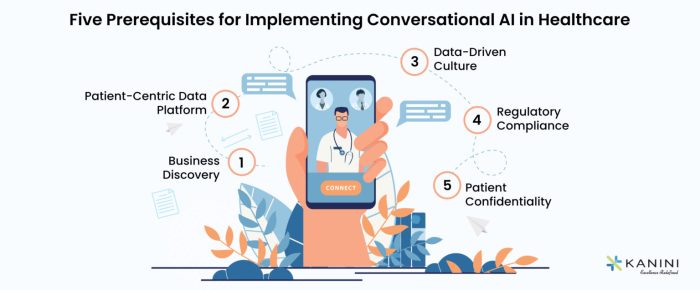
Implementing Healthcare Conversational AI involves various components, including:
- Chatbot Development: Creating a conversational interface that can interact with users effectively.
- Data Integration: Integrating the AI system with relevant healthcare data sources to provide accurate information.
- Compliance with Regulations: Ensuring that the AI platform complies with healthcare regulations and standards to safeguard patient data and privacy.
Final Conclusion
Concluding our discussion on Healthcare Conversational AI, we have journeyed through its definition, operation, and benefits, shedding light on the transformative role of AI in healthcare conversations.
FAQ Overview
How can Healthcare Conversational AI improve patient care?
Healthcare Conversational AI can enhance patient care by providing personalized assistance, streamlining communication, and offering timely responses to queries.
What are some examples of AI applications in healthcare communication?
AI is utilized in healthcare for tasks like appointment scheduling, medication reminders, symptom assessment, and virtual health assistants.