
Beginning with How Conversational AI Improves Patient Engagement in Healthcare, the narrative unfolds in a compelling and distinctive manner, drawing readers into a story that promises to be both engaging and uniquely memorable.
Conversational AI, a cutting-edge technology, is revolutionizing patient engagement in healthcare by offering personalized interactions and enhancing communication between patients and providers. This article delves into the various aspects of how Conversational AI is transforming the healthcare landscape.
Introduction to Conversational AI in Healthcare
Conversational AI refers to artificial intelligence technology that enables computers to understand and generate human language for natural communication. In healthcare, conversational AI plays a crucial role in improving patient engagement, satisfaction, and overall outcomes.
Examples of Conversational AI Applications in Healthcare
- Virtual Health Assistants: Chatbots or voice assistants that interact with patients to provide information, schedule appointments, or answer medical queries.
- Telemedicine Platforms: Utilizing AI-powered chat interfaces to facilitate remote consultations between patients and healthcare providers.
- Medication Management: AI solutions that remind patients to take their medications, track adherence, and provide dosage instructions through personalized conversations.
The Importance of Patient Engagement in Healthcare Settings
Patient engagement refers to the active involvement of patients in their own care journey, leading to better health outcomes and overall satisfaction. By leveraging conversational AI, healthcare providers can enhance patient engagement by offering personalized support, timely communication, and convenient access to healthcare resources.
Engaged patients are more likely to follow treatment plans, adhere to medications, and actively participate in shared decision-making with their healthcare team.
Benefits of Conversational AI for Patient Engagement

Conversational AI plays a crucial role in enhancing patient engagement in healthcare by improving communication, providing personalized interactions, and facilitating patient education.
Enhanced Patient-Provider Communication
Conversational AI platforms enable real-time and continuous communication between patients and healthcare providers. Through chatbots or virtual assistants, patients can easily reach out to their healthcare providers for inquiries, appointment scheduling, medication reminders, and follow-up care. This seamless communication improves patient satisfaction, reduces wait times, and enhances overall healthcare experience.
Improved Patient Education
Conversational AI platforms offer valuable educational resources to patients, helping them better understand their health conditions, treatment options, and preventive care measures. By delivering personalized health information, such as medication instructions, lifestyle recommendations, and disease management tips, conversational AI empowers patients to take control of their health and make informed decisions.
Personalized Patient Interactions
Conversational AI leverages data analytics and machine learning algorithms to personalize patient interactions based on individual preferences, health history, and treatment goals. By tailoring responses and recommendations to each patient's specific needs, conversational AI enhances engagement, fosters trust, and promotes adherence to treatment plans.
This personalized approach leads to better health outcomes and patient satisfaction.
Challenges and Limitations of Implementing Conversational AI in Healthcare
Implementing conversational AI in healthcare comes with its own set of challenges and limitations that need to be addressed for successful integration and adoption.
Barriers to Adopting Conversational AI in Healthcare
There are several potential barriers that healthcare organizations may face when implementing conversational AI, such as initial cost of implementation, resistance from staff, and lack of technical expertise. Overcoming these barriers requires careful planning, training, and stakeholder engagement.
Privacy and Security Concerns
Privacy and security concerns are paramount when utilizing conversational AI in healthcare, especially when dealing with sensitive patient data. Ensuring compliance with regulations such as HIPAA and implementing robust security measures to protect patient information is crucial to building trust and maintaining confidentiality.
User-Friendliness for All Patients
One of the challenges in implementing conversational AI in healthcare is ensuring that the technology is user-friendly for all patients, including those with limited digital literacy or disabilities. Designing interfaces that are intuitive, accessible, and inclusive is essential to ensure that all patients can effectively engage with conversational AI tools.
Best Practices for Implementing Conversational AI in Healthcare
Implementing conversational AI in healthcare can be a game-changer, but it requires careful planning and execution. Here are some best practices to help healthcare organizations successfully integrate conversational AI, train healthcare providers, and overcome resistance to adopting this technology.
Steps for Healthcare Organizations
- Conduct a thorough assessment of organizational needs and goals before implementing conversational AI.
- Choose a reliable conversational AI platform that meets the specific requirements of your healthcare setting.
- Ensure proper data security measures are in place to protect patient information.
- Provide adequate training and support to staff members who will be using the conversational AI tools.
- Regularly evaluate the performance of the conversational AI system and make necessary adjustments to improve outcomes.
Tips for Training Healthcare Providers
- Offer comprehensive training sessions to familiarize healthcare providers with the features and capabilities of the conversational AI tools.
- Encourage providers to actively engage with the technology and provide feedback on their user experience.
- Provide ongoing support and resources to help providers troubleshoot any issues or challenges they may encounter while using the technology.
Strategies for Overcoming Resistance
- Educate staff members about the benefits of conversational AI in improving patient engagement and outcomes.
- Address concerns about job displacement by highlighting how conversational AI can enhance rather than replace the role of healthcare providers.
- Involve key stakeholders in the decision-making process to gain buy-in and support for implementing conversational AI.
- Start with pilot programs or small-scale implementations to demonstrate the effectiveness of the technology before full-scale deployment.
Final Thoughts
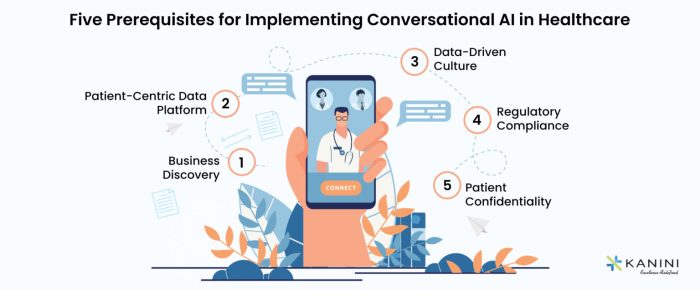
In conclusion, the impact of Conversational AI on patient engagement in healthcare is undeniable. By fostering better communication, education, and personalized interactions, this technology is paving the way for improved patient outcomes and experiences. As healthcare continues to evolve, embracing Conversational AI will likely become increasingly crucial in delivering high-quality care.
Essential Questionnaire
How can Conversational AI enhance patient education?
Conversational AI can deliver tailored educational content to patients based on their individual needs and preferences, ensuring better understanding and engagement.
What are the potential barriers to adopting Conversational AI in healthcare?
Barriers may include cost of implementation, resistance to change from healthcare professionals, and concerns about data privacy and security.
How does Conversational AI personalize patient interactions?
Conversational AI uses data analytics to create personalized interactions with patients, offering tailored responses and recommendations based on individual characteristics and medical history.