Exploring the critical role of Health IT in Electronic Medical Records (EMR), this introduction sets the stage for a comprehensive discussion on how technology is reshaping the healthcare landscape.
Detailing the key aspects of Health IT integration and its impact on modern healthcare practices, this overview aims to enlighten readers on the significance of digital solutions in patient care.
Overview of Health IT in EMR
Health IT plays a crucial role in the management of Electronic Medical Records (EMRs) by utilizing technology to improve healthcare delivery, efficiency, and patient outcomes. It involves the use of digital tools and systems to capture, store, manage, and exchange health information electronically.Health IT tools commonly used in managing EMRs include Electronic Health Records (EHRs), Picture Archiving and Communication Systems (PACS), Clinical Decision Support Systems (CDSS), and Health Information Exchange (HIE) platforms.
These tools help healthcare providers access and share patient information securely, streamline workflows, and make data-driven decisions for better patient care.Integrating Health IT in modern healthcare systems is essential for enhancing care coordination, reducing medical errors, improving patient engagement, and increasing overall healthcare quality.
It enables healthcare providers to have a comprehensive view of a patient's medical history, treatment plans, and outcomes, leading to more personalized and effective care delivery.
Benefits of Health IT in EMR
Health IT systems offer numerous advantages when it comes to maintaining electronic medical records. These benefits range from improving efficiency and accuracy to enhancing communication among healthcare providers.
Improved Efficiency and Accuracy
- Health IT systems streamline the process of storing and retrieving patient information, reducing the time spent on administrative tasks.
- Automation of data entry minimizes the risk of errors that can occur with manual record-keeping, ensuring the accuracy of medical records.
- Access to real-time data allows healthcare providers to make informed decisions quickly, leading to more efficient patient care.
Enhanced Communication Among Healthcare Providers
- Health IT systems enable seamless sharing of patient information among different healthcare facilities, promoting collaboration and continuity of care.
- Electronic communication tools within EMR systems facilitate quick and secure exchanges between physicians, nurses, and other healthcare professionals.
- Improved communication leads to better coordination of treatment plans, reducing the likelihood of medical errors and improving patient outcomes.
Challenges in Implementing Health IT for EMR
Implementing Health IT solutions for Electronic Medical Records (EMR) can be a complex process that comes with various challenges. From technical issues to training requirements, healthcare organizations face several obstacles when integrating Health IT into their EMR systems.
Security Concerns in Storing EMRs Digitally
One of the primary challenges in implementing Health IT for EMR is ensuring the security and privacy of patient information. Storing EMRs digitally opens up the potential for data breaches, hacking, and unauthorized access to sensitive medical records. Healthcare providers must invest in robust cybersecurity measures to protect patient data and comply with regulations such as HIPAA.
Training and Education Requirements for Healthcare Professionals
Another significant challenge is the need for training and education for healthcare professionals to effectively use Health IT in EMR systems
Role of Interoperability in Health IT for EMR
Interoperability plays a crucial role in the context of Health IT and Electronic Medical Records (EMR) by enabling seamless data exchange between different healthcare systems. This ensures that patient information can be accessed and shared accurately and efficiently across various platforms and organizations.
Significance of Interoperability
Interoperability in Health IT for EMR allows healthcare providers to access comprehensive patient data regardless of the system they are using. This enables them to make well-informed decisions, provide better care coordination, and improve patient outcomes.
Benefits of Achieving Interoperability
- Enhanced Patient Care: Interoperability ensures that healthcare providers have access to complete and up-to-date patient information, leading to better diagnosis and treatment decisions.
- Improved Efficiency: Seamless data exchange reduces duplication of tests, paperwork, and administrative tasks, streamlining the healthcare process.
- Enhanced Communication: Interoperability allows for better communication among healthcare providers, leading to improved care coordination and patient safety.
Challenges in Achieving Interoperability
- Standardization: Lack of standardized data formats and protocols can hinder interoperability efforts, making it difficult to exchange information accurately.
- Privacy and Security Concerns: Ensuring the protection of patient data during exchange is crucial, as interoperability increases the risk of data breaches and unauthorized access.
- Cost and Resource Constraints: Implementing interoperable systems can be costly and resource-intensive for healthcare organizations, posing challenges in achieving widespread adoption.
Final Thoughts
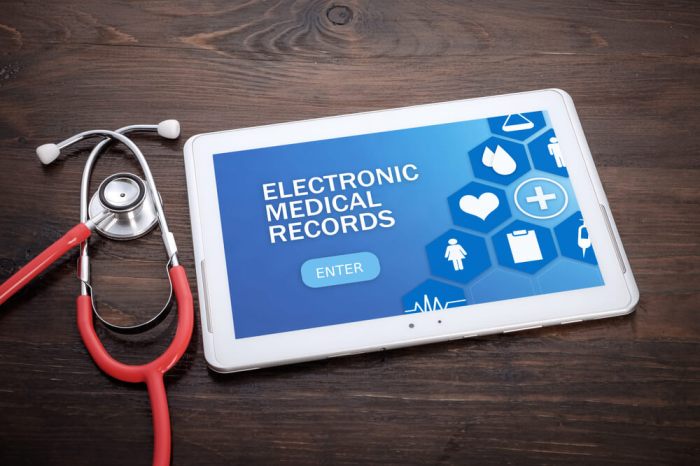
In conclusion, the integration of Health IT in Electronic Medical Records presents a paradigm shift in healthcare delivery, fostering efficiency, accuracy, and enhanced communication among healthcare providers. This transformative journey into the digital realm of healthcare signifies a new era of patient-centered care and streamlined medical processes.
FAQ Section
What are some common Health IT tools used in managing EMRs?
Common Health IT tools include Electronic Health Records (EHR) systems, clinical decision support systems, and telemedicine platforms.
What are the security concerns related to storing EMRs digitally?
Security concerns include data breaches, unauthorized access, and compliance with privacy regulations like HIPAA. Implementing robust data encryption and access controls can mitigate these risks.
How does interoperability enhance Health IT in EMR systems?
Interoperability allows seamless data exchange between different healthcare systems, enabling efficient sharing of patient information across providers and improving continuity of care.